




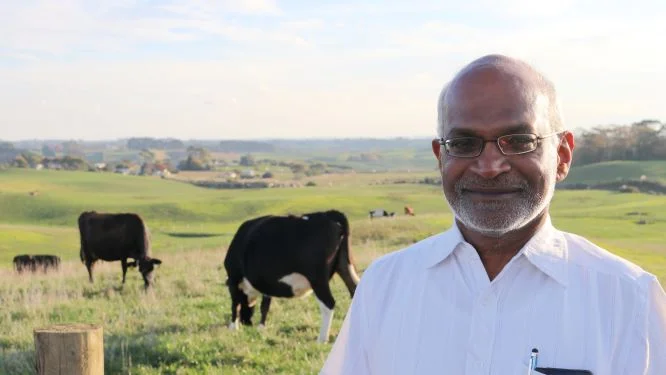
NZ farmers can achieve methane emissions target
Auckland - Farmers can reduce greenhouse gas emissions and meet the targets set by the government’s new climate change bill by looking at new biotech solutions, Zest Biotech chief technical officer Nathan Balasingham says.
New Zealand should consider the opportunity to earn carbon credits by implementing some or all of the recommendations of the UN’s Food and Agriculture Organisation (FAO) to achieve a 37 percent reduction in methane intensity.
The FAO has recommended options to reduce agricultural emissions and farming’s environmental footprint while continuing to ensure food security to feed a growing, richer and more urbanised world population, Balasingham says.
New Zealand biotechnologies such as Zest Biotech’s Biozest and AgResearch’s high metabolisabled energy ryegrass can increase productivity while reducing greenhouse gas emissions, he says.
“Both AgResearch and Zest Biotech have modelled the benefits, predicting an increase in farmgate returns of approximately $900 per hectare and a reduction of greenhouse gas of between 20 and 48 percent.
“At 30 percent reduction, a sheep and beef farm could deliver an estimated $23.40 per hectare in carbon credits. Zest biotech has also proven that urea excretion can be reduced by 20 to 48 percent.
“This means we can become a wealthier country, environmental champions and affirm our grass-fed milk and meat and clean, green NZ brands.”
Biozest has been developed by New Zealand scientist Nathan Balasingham who was previously a DSIR scientist where he worked with world-renowned scientist Roger Slack on how plants produced oils or lipids.
This scientific background coupled with more than 40 years of scientific and entrepreneurial innovation, such as the invention of the frozen kiwifruit drink Kiwi Crush, enabled him to invent Biozest.
The mechanism of action of AgResearch’s rye grass is very similar to Biozest. While the mechanism of action of both technologies involves lipids (oils). The difference is that in AgResearch’s grass the initial metabolic pathway is induced via gene manipulation while Zest Biotech do it through molecular biology, he says.
“Biozest technology can be implemented immediately and there is no GMO or chemical residue barriers. All farmers, conventional, biological and organic can use our product. We are on a pasture-fed system which gives New Zealand an additional advantage if the Biozest technology is widely used.
“The UN’s FAO estimates grasslands contain globally 343 billion tonnes of carbon, nearly 50 percent more than is stored in forests worldwide.
“Our Biozest treatment can double pasture productivity and therefore double the sequestration of carbon which the FAO estimates is around 100 tonnes per hectare. Biozest treatment increases pasture productivity eliminating the import or cultivation of supplementary feed, reducing another GHG liability.
“Our trial data shows productivity increases with Biozest which farmers will find reduces greenhouse gas and is more productive for their livestock,” Balasingham says.
For further information contact Make Lemonade editor-in-chief Kip Brook on 0275 030188
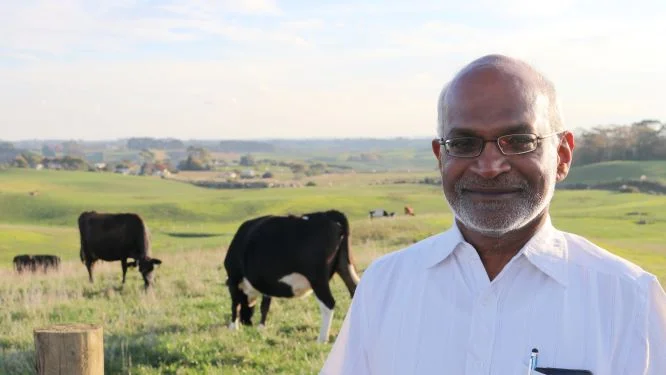
Photo: Nathan Balasingham



Lisa was born in Auckland at the start of the 1970s, living in a small campsite community on the North Shore called Browns Bay. She spent a significant part of her life with her grandparents, often hanging out at the beaches. Lisa has many happy memories from those days at Browns Bay beach, where fish were plentiful on the point and the ocean was rich in seaweed. She played in the water for hours, going home totally “sun-kissed.” “An adorable time to grow up,” Lisa tells me.
Lisa enjoyed many sports; she was a keen tennis player and netballer, playing in the top teams for her age right up until the family moved to Wellington. Lisa was fifteen years old, which unfortunately marked the end of her sporting career. Local teams were well established in Wellington, and her attention was drawn elsewhere.