




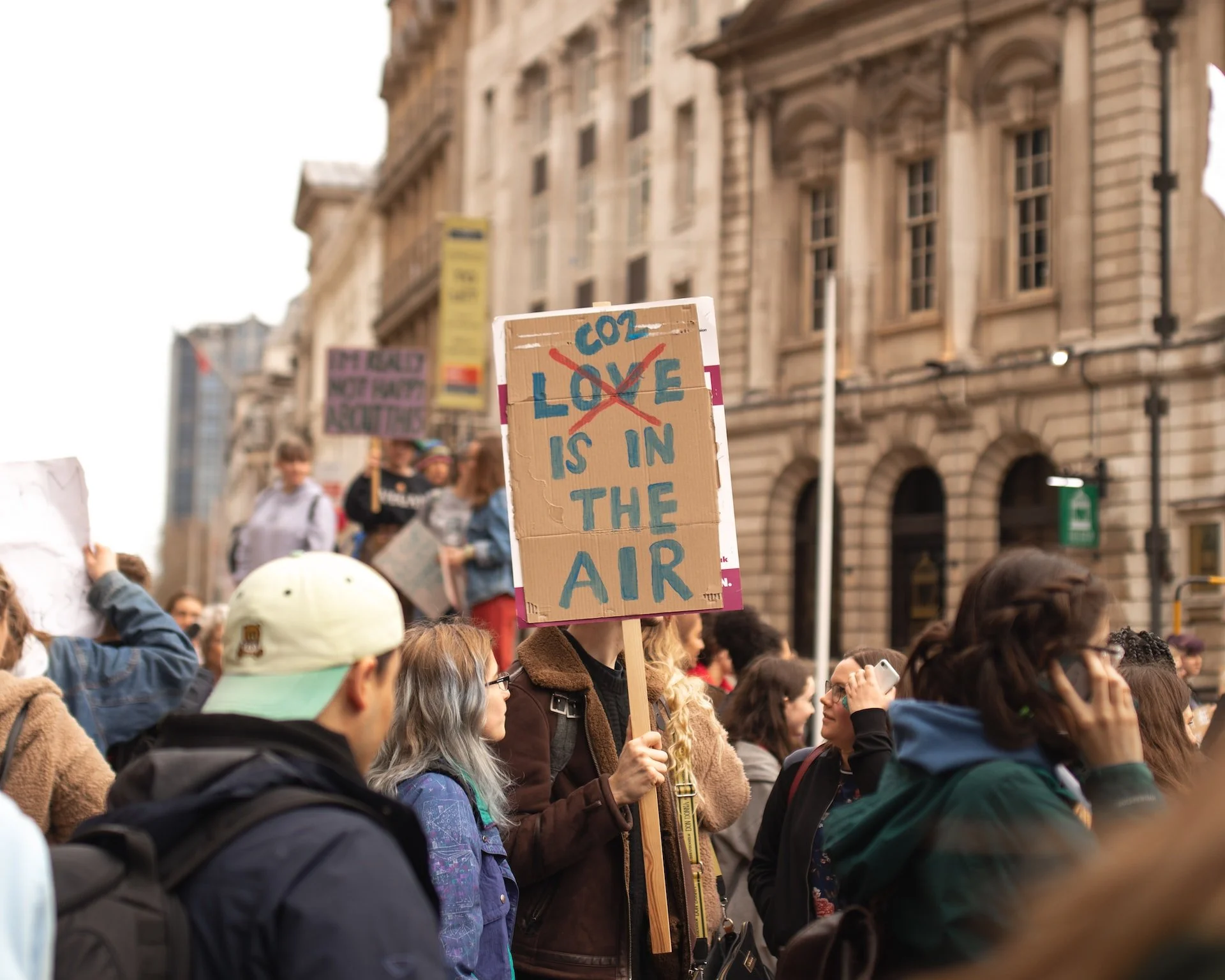
No sign of decrease in global CO2 emissions
London - Global carbon emissions in 2022 remain at record levels -- with no sign of the decrease that is urgently needed to limit warming to 1.5°C, according to the Global Carbon Project science team.
If current emissions levels persist, there is now a 50 percent chance that global warming of 1.5Cdeg will be exceeded in nine years.
The new report projects total global CO2 emissions of 40.6 billion tonnes (GtCO2) in 2022. This is fuelled by fossil CO2 emissions which are projected to rise 1.0 percent compared to 2021, reaching 36.6 GtCO2, slightly above the pre covid levels. Emissions from land-use change such as deforestation are projected to be 3.9 GtCO2 in 2022.
Projected emissions from coal and oil are above their 2021 levels, with oil being the largest contributor to total emissions growth. The growth in oil emissions can be largely explained by the delayed rebound of international aviation following covid pandemic restrictions.
The 2022 picture among major emitters is mixed. Emissions are projected to fall in China (0.9 percent) and the EU (0.8 percent), and increase in the USA (1.5 percent) and India (6 percent), with a 1.7 percent rise in the rest of the world combined.
The remaining carbon budget for a 50 percent likelihood to limit global warming to 1.5C has reduced to 380 GtCO2, exceeded after nine years if emissions remain at 2022 levels, and 1230 GtCO2 to limit to 2C, 30 years at 2022 emissions levels.
To reach zero CO2 emissions by 2050 would now require a decrease of about 1.4 GtCO2 each year, comparable to the observed fall in 2020 emissions resulting from covid lockdowns, highlighting the scale of the action required.
Land and ocean, which absorb and store carbon, continue to take up around half of the CO2 emissions. The ocean and land CO2 sinks are still increasing in response to the atmospheric CO2 increase, although climate change reduced this growth by an estimated 4 percent in ocean sink and 17 percent in land sink over the 2012-2021 decade.
This year's carbon budget shows that the long-term rate of increasing fossil emissions has slowed. The average rise peaked at +3 percent per year during the 2000s, while growth in the last decade has been about +0.5 percent per year.
The research team including the University of Exeter, the University of East Anglia, CICERO and Ludwig-Maximilian-University Munich says the slow down is not enough emissions decrease.
There are some positive signs but more meaningful is needed globally to have any chance of limiting global warming close to 1.5C. The global carbon budget numbers monitor the progress on climate action and right now we are not seeing the action required.
The findings reveal turbulence in emissions patterns this year resulting from the pandemic and global energy crises.
If governments respond by turbo charging clean energy investments and planting, not cutting, trees, global emissions could rapidly start to fall.




Lisa was born in Auckland at the start of the 1970s, living in a small campsite community on the North Shore called Browns Bay. She spent a significant part of her life with her grandparents, often hanging out at the beaches. Lisa has many happy memories from those days at Browns Bay beach, where fish were plentiful on the point and the ocean was rich in seaweed. She played in the water for hours, going home totally “sun-kissed.” “An adorable time to grow up,” Lisa tells me.
Lisa enjoyed many sports; she was a keen tennis player and netballer, playing in the top teams for her age right up until the family moved to Wellington. Lisa was fifteen years old, which unfortunately marked the end of her sporting career. Local teams were well established in Wellington, and her attention was drawn elsewhere.