




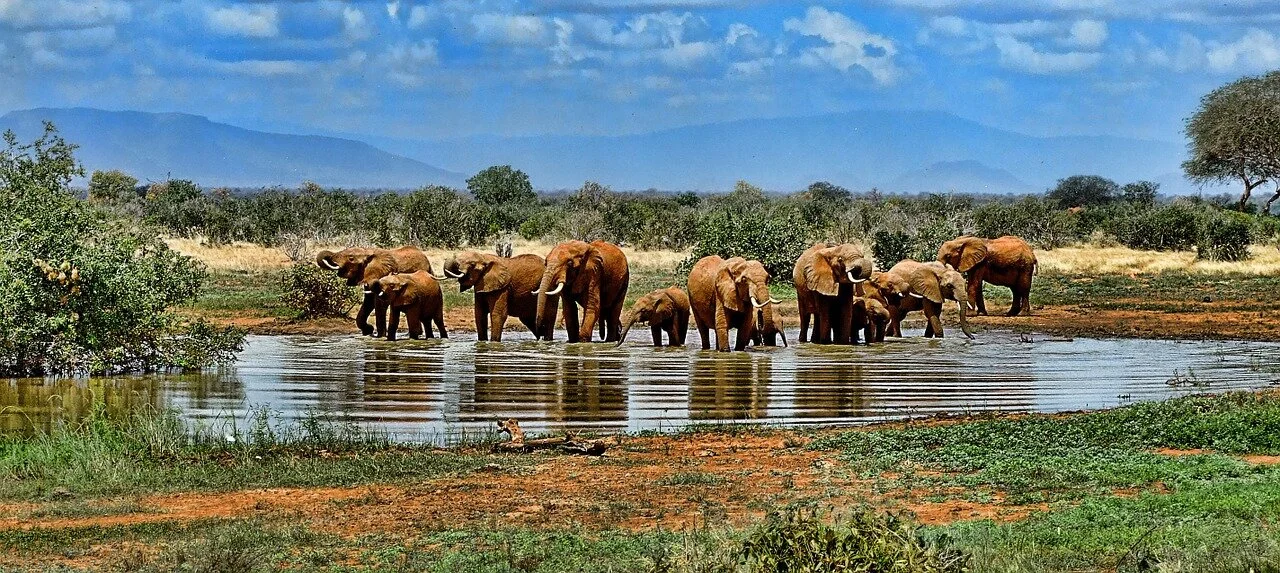
New elephant research could inspire robot construction
Otautahi - New research has found elephants dilate their nostrils in order to create more space in their trunks, despite weighing 100kg, allowing them to store up to nine litres of water.
They can also suck up three litres of water a second -- a speed 50 times faster than a human sneeze.
The findings could inspire different ways to building robots that manipulate air to move or hold things.
Georgia Institute of Technology researchers in the US sought to better understand the physics of how elephants use their trunks to move and manipulate air, water, food and other objects.
They also wanted to learn if the mechanics could inspire the creation of more efficient robots that use air motion to hold and move things.
The researchers found that elephants are the only animals able to use suction on land and underwater. Their trunks act like suitcases, capable of expanding when necessary.
The Georgia Tech team worked with vets at Zoo Atlanta, studying elephants as they ate various foods.
By watching elephants inhale liquid from an aquarium, the team was able to time the durations and measure volume. In just 1.5 seconds, the trunk sucked up 3.7 litres, the equivalent of 20 toilets flushing simultaneously.
An elephant's nasal passage is relatively small and researchers saw ultra-sonographic images and watched the nostrils expand. Air makes the walls open, and the animal can store far more water than the researchers originally estimated.
Based on the pressures applied, the researchers suggested elephants inhale at speeds that are comparable to Japan's 480kmh bullet trains.



Lisa was born in Auckland at the start of the 1970s, living in a small campsite community on the North Shore called Browns Bay. She spent a significant part of her life with her grandparents, often hanging out at the beaches. Lisa has many happy memories from those days at Browns Bay beach, where fish were plentiful on the point and the ocean was rich in seaweed. She played in the water for hours, going home totally “sun-kissed.” “An adorable time to grow up,” Lisa tells me.
Lisa enjoyed many sports; she was a keen tennis player and netballer, playing in the top teams for her age right up until the family moved to Wellington. Lisa was fifteen years old, which unfortunately marked the end of her sporting career. Local teams were well established in Wellington, and her attention was drawn elsewhere.