




Robotics research strengthens relationships
Lincoln - Sometimes a research project leads not just to new technologies, but also to new ways of working.
That’s exactly what happened with a project to develop workforce robots for primary industries, which began in 2017.
It was funded for two years with a $2 million grant from the Ministry of Business, Innovation and Employment’s national science challenge science for technological innovations project.
The programme included scientists from Lincoln Agritech, Scion and the universities of Auckland, Canterbury, Otago, Massey and Victoria.
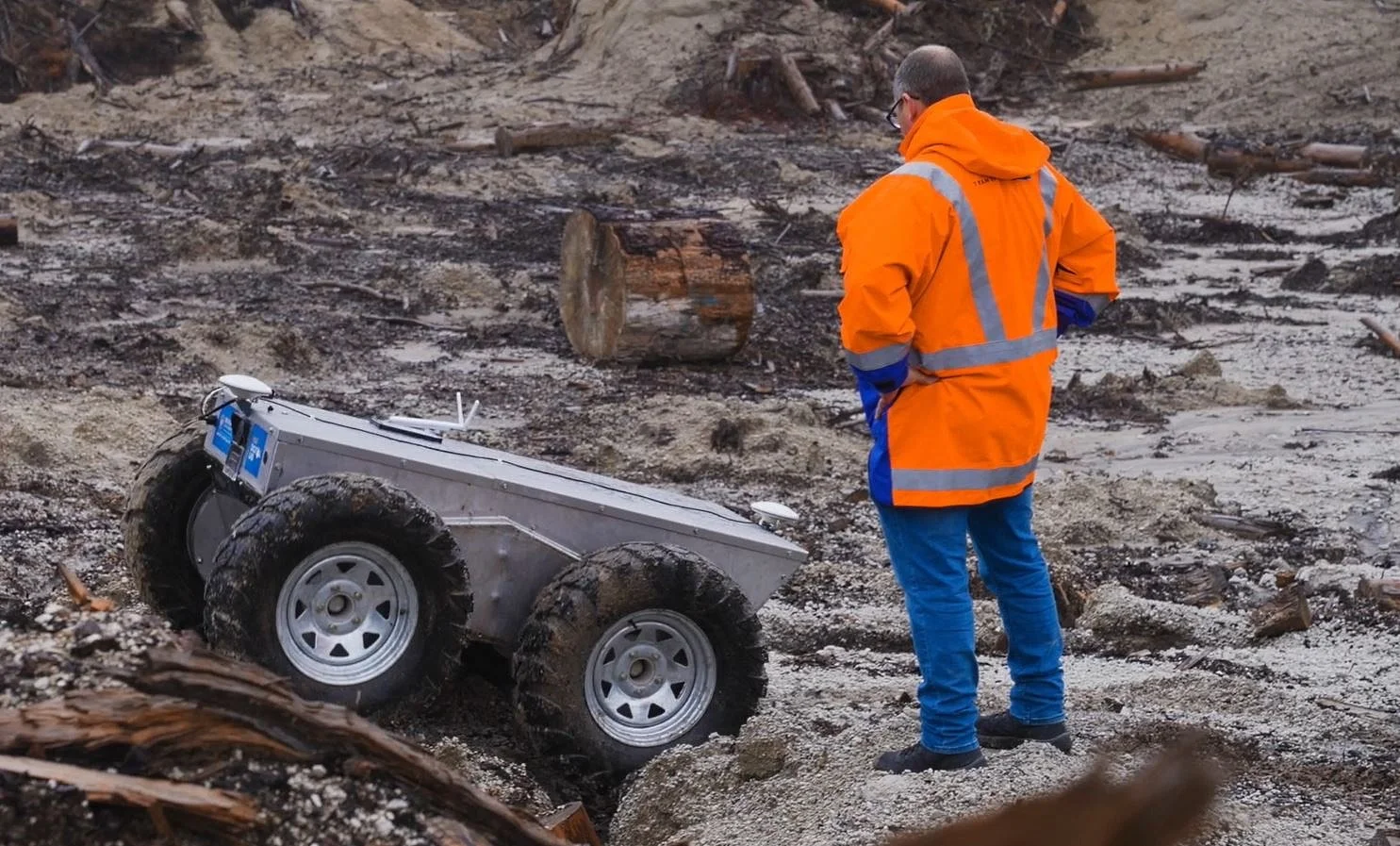
They proposed developing self-learning robots that could work in harsh outdoor environments such as agriculture and forestry. These robots had to be able to detect and operate safely around human workers, as well as navigate rough terrain.
Called the robotic spearhead, it was a science-led project with industry guidance. Individual science teams worked on one aspect each before integrating their results into a full-fledged outdoor robot, says Lincoln Agritech’s precision agriculture group manager Armin Werner.
After two years the project won a three-year extension, focused on forestry, and working with the Lake Taupō Forest Trust.
The researchers were quite advanced in developing a robot they thought would be used as a self-guided mule to carry seedlings to the forestry workers planting them. But then the research approach turned on its head from being science-led to industry-led.
Lake Taupō Forestry Trust and Lake Rotoaira Forest Trust manager Geoff Thorp says working with the project has been an opportunity to influence what future research will do.
He saw some of the techniques that they’re starting to develop as things that his trust will be able to use one way or the other.
The project has now been funded for another 18 months, focusing on commercialising some of the technology developed.
The follow-up project will build and commercialise the manoeuvring control system for a robot that will, almost automatically, lay and maintain forest tracks by shedding the understorey. This control system could later be modified to be used in other outdoor robots.
Photo: The prototype robot is put through its paces during a recent demonstration day


Lisa was born in Auckland at the start of the 1970s, living in a small campsite community on the North Shore called Browns Bay. She spent a significant part of her life with her grandparents, often hanging out at the beaches. Lisa has many happy memories from those days at Browns Bay beach, where fish were plentiful on the point and the ocean was rich in seaweed. She played in the water for hours, going home totally “sun-kissed.” “An adorable time to grow up,” Lisa tells me.
Lisa enjoyed many sports; she was a keen tennis player and netballer, playing in the top teams for her age right up until the family moved to Wellington. Lisa was fifteen years old, which unfortunately marked the end of her sporting career. Local teams were well established in Wellington, and her attention was drawn elsewhere.