




Celebrating Marlborough’s Homefront heroes this ANZAC Day

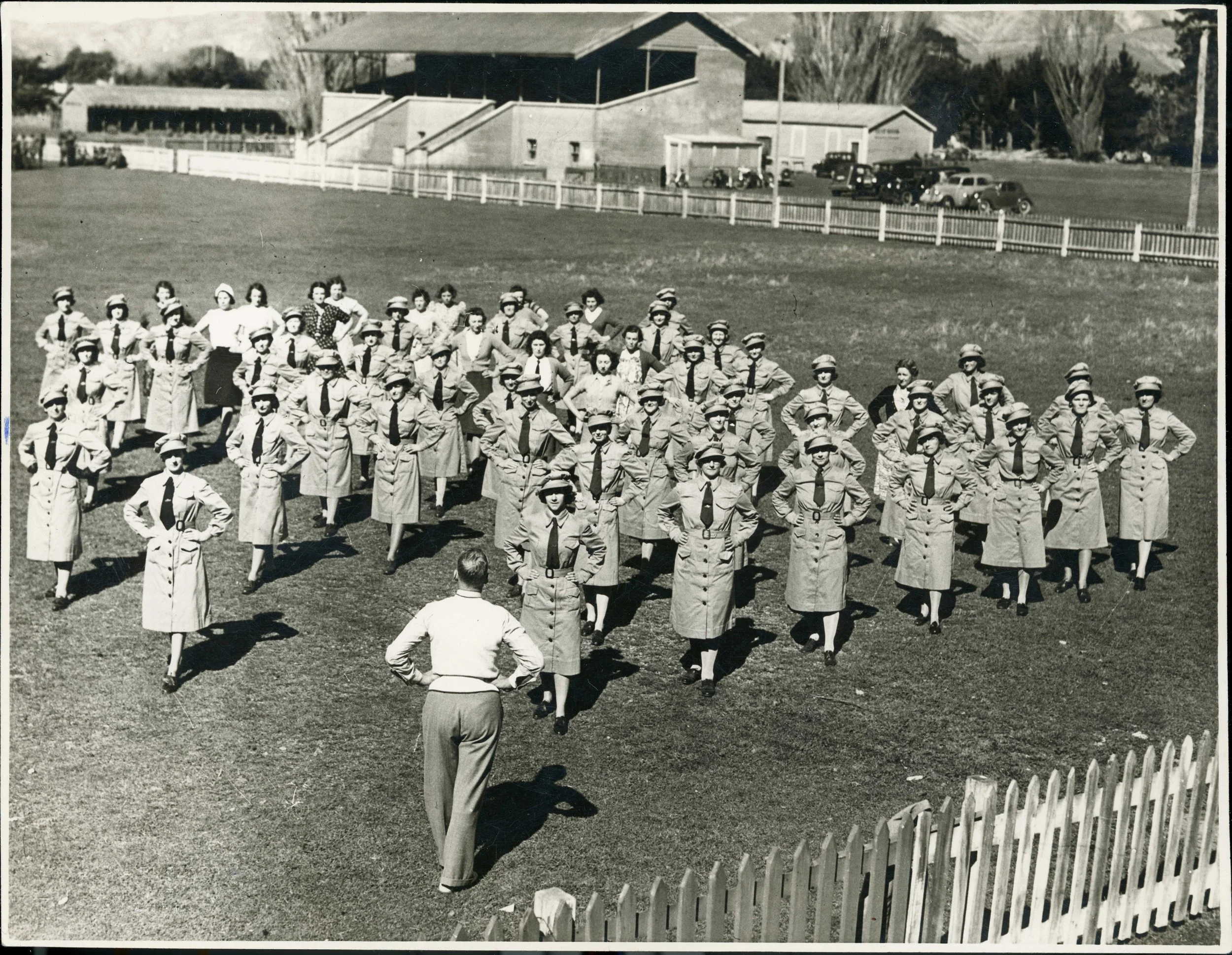
Marlborough’s homefront heroes - members of the Women's War Service Auxiliary gather at A&P Park in 1941. Photographer unknown - Vercoe Collection, Marlborough Museum.
An exhibition looking at the lives of Marlborough women during World War 2 opens at the Marlborough Museum this Friday 26 April to coincide with Anzac Day.
Homefront Heroes – Marlborough Women during the Second World War explores topics like rationing, spinning and knitting for soldiers, and voluntary work in the Women's War Service Auxiliary and will run until 4 August.
Marlborough Museum manager Liz Ward said the exhibition would also celebrate the Land Girls (women who went to work on farms during the war) and highlight the “manpowering” of women sent by the Government to help fill wartime gaps in essential industries such as clothing manufacturing.
The exhibition features a recent addition to the museum’s collection, a wall hanging made by the Clarence Branch of the Women's Division of the Farmers’ Union. It was made as a fundraiser and is embroidered with the names of local soldiers and families.
“We would love to know more about the people whose names are on the wall hanging. We encourage anyone who has connections to the Clarence area to see if any of their families’ names are on the hanging to share that history with us,” Liz said.
The war had an enormous impact on women at home while their brothers, husbands and fathers served their country on the other side of the world. “This exhibition celebrates those who were left behind to be our homefront heroes,” she said.
Ends




Lisa was born in Auckland at the start of the 1970s, living in a small campsite community on the North Shore called Browns Bay. She spent a significant part of her life with her grandparents, often hanging out at the beaches. Lisa has many happy memories from those days at Browns Bay beach, where fish were plentiful on the point and the ocean was rich in seaweed. She played in the water for hours, going home totally “sun-kissed.” “An adorable time to grow up,” Lisa tells me.
Lisa enjoyed many sports; she was a keen tennis player and netballer, playing in the top teams for her age right up until the family moved to Wellington. Lisa was fifteen years old, which unfortunately marked the end of her sporting career. Local teams were well established in Wellington, and her attention was drawn elsewhere.